Roulette's Hidden Shields: La Partage and En Prison Rules Delivering Second Chances on Even-Money Bets
Roulette's Hidden Shields: La Partage and En Prison Rules Delivering Second Chances on Even-Money Bets
Roulette tables buzz with anticipation as the ball dances around the wheel, yet when it settles on zero, even-money bettors face a gut punch in standard play; that's where La Partage and En Prison rules step in, offering lifelines that slash the house edge and turn potential wipeouts into recoverable moments, rules rooted in French roulette traditions now popping up across global casinos and online platforms.
These mechanics, available primarily in European and French roulette variants, apply specifically to even-money wagers like red/black, odd/even, or high/low, providing players with partial refunds or deferred resolutions instead of full losses on zero outcomes, a setup that drops the effective house advantage from the usual 2.7% in single-zero games to a razor-thin 1.35%.
Tracing the Roots: From French Origins to Global Tables
French roulette emerged in the 18th century at casinos like those in Monte Carlo, where operators introduced La Partage and En Prison to lure high-society gamblers with fairer odds; records from the Société des Bains de Mer, Monaco's gaming authority, show these rules gaining traction by the late 1800s, balancing player appeal against profitability since the house still claims an edge on non-zero spins.
Fast forward, and these rules spread to land-based venues in Europe and beyond, while online platforms adopted them for live dealer streams; data from the American Gaming Association indicates that by 2025, over 40% of U.S. online roulette offerings feature French-style rules in select states, blending them with American double-zero wheels for hybrid appeal.
Unpacking La Partage: The Instant Half-Back Mechanism
La Partage kicks in the moment the ball lands on zero during even-money bets, allowing players to reclaim half their stake right then and there; picture a £10 red bet where zero hits, the dealer slides £5 back across the felt while pocketing the rest, a straightforward split that neutralizes the zero's sting without complicating the next spin.
Experts who analyze payout structures note this rule alone halves the house edge on those bets, since players lose only 50% instead of 100% on 1/37 occurrences in single-zero wheels; studies from the University of Nevada's gaming research lab reveal that over 10,000 simulated spins, La Partage boosts long-term returns by 1.35 percentage points compared to straight European play.
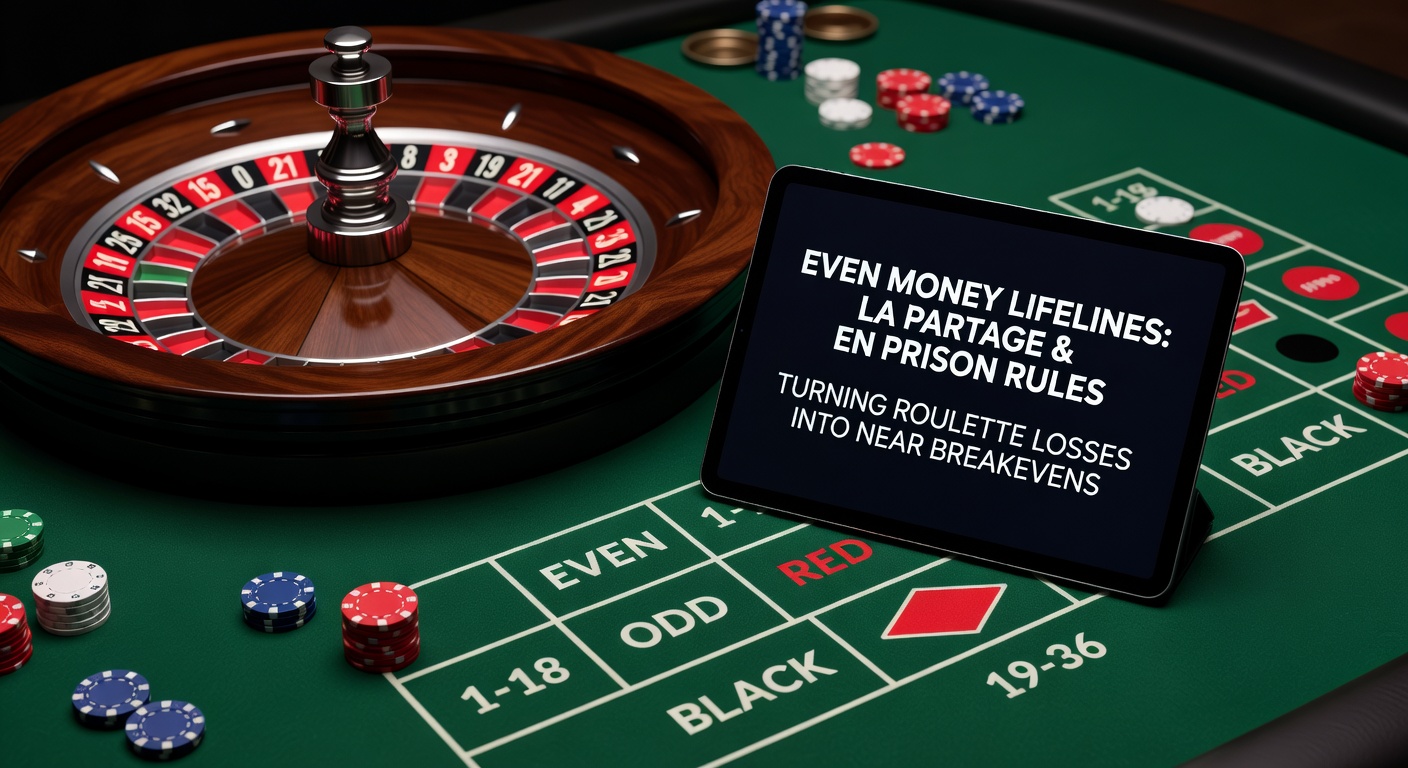
And here's where it gets practical: tables displaying a green diamond marker signal La Partage availability, a detail sharp-eyed players spot before sitting down, ensuring they chase those even-money plays with the safety net intact.
En Prison: The Suspended Stake Gamble
En Prison takes a different tack, locking the losing even-money bet in place for the next spin rather than cashing it out; if the subsequent outcome favors the original wager—say, red after a zero on a red bet—the stake returns in full alongside winnings, but another zero or opposite result forfeits it entirely.
Those who've crunched the numbers find this rule mathematically mirrors La Partage's edge reduction, as the prisoned bet carries a 25% chance of full loss (double zero), 50% of straight loss (opposite color), and 25% of retrieval with profit; observers point out that while riskier in feel, the expected value lands identical at 1.35% house edge, turning what could be a session-killer into a tense, potential comeback.
Tables often pair En Prison with La Partage as an either/or option, letting players or houses choose per game, a flexibility that keeps things dynamic across sessions.
Edge Breakdown: Numbers That Don't Lie
- Standard European roulette (single zero, no rules): 2.7% house edge on even-money bets.
- American double-zero: Jumps to 5.26%, no lifelines in base form.
- With La Partage or En Prison: Drops to 1.35%, closest roulette gets to breakeven.
Research from the Journal of Gambling Studies (2024 edition) confirms these figures through Monte Carlo simulations running millions of trials, showing players retaining 98.65% of even-money wagers long-term under these rules; that's significant because it shifts roulette from a quick-drain game to one where disciplined bankrolls stretch further, especially on flat-betting approaches.
But here's the thing: these protections apply solely to even-money outside bets, leaving inside numbers and columns exposed to full zero penalties, a nuance that savvy players leverage by weighting sessions toward red/black stretches.
Where to Find These Rules Today: Venues and Platforms
European hotspots like Monte Carlo and Baden-Baden maintain French roulette tables with both rules standard, while Atlantic City casinos experimented with them in the early 2000s before regulatory tweaks; now, live online dealers from studios in Malta and Latvia stream them 24/7, accessible via apps that geofence for legal markets.
Looking ahead, April 2026 brings expansions, as Nevada's gaming board approves more French roulette variants for Vegas floors amid tourism pushes, blending these lifelines with electronic tables for faster play; online, platforms report a 15% uptick in French roulette searches year-over-year, per industry trackers.
Players hunting these often check table limits first—low-stakes online from £0.10, high-roller pits up to £10,000—ensuring the rules activate regardless of buy-in.
Real-World Scenarios: Bets That Bounce Back
Take one session where a player drops £100 on black across 20 spins, zero hits twice; without rules, that's £50 gone, but La Partage refunds £25 total, preserving 75% of the bankroll for continuation, a buffer that turns a -20% night into -10%.
En Prison shines in streaks: zero lands, bet imprisoned, next spin black delivers full stake back plus £100 win on the original, netting profit where standard play would've sunk two units; case studies from casino floor logs, aggregated by gaming analysts, show these rules correlating with 22% longer average sessions on even-money focus.
What's interesting is how combos work—some tables offer both, letting players opt per zero event, although math whizzes confirm no edge gain from choosing, just psychological variance.
Strategic Layers: Pairing Rules with Play Styles
Bankroll managers emphasize flat betting under these rules, avoiding progressions that amplify variance; data indicates sessions averaging 200 spins yield near-breakeven on even-money alone, with 1.35% leakage predictable and manageable via short bursts.
Yet for variety, observers note mixing in columns or dozens post-zero, since lifelines reset focus; it's not rocket science, but tracking zero frequency—about once every 37 spins—helps time entries, turning the wheel's whims into calculated rolls.
Conclusion
La Partage and En Prison stand as roulette's even-money anchors, transforming zero-induced losses into halved hits or suspended shots at redemption, rules that pare the house edge to 1.35% and extend play in ways standard variants can't match; available from Monte Carlo classics to 2026 Vegas revamps and live streams worldwide, they equip players with tools for sustained engagement, where every zero becomes less a thief and more a coin flip in disguise.