Guardian Probe Exposes Illegal Casino Network Luring 2.3 Million UK Visitors Past GamStop Barriers
Guardian Probe Exposes Illegal Casino Network Luring 2.3 Million UK Visitors Past GamStop Barriers

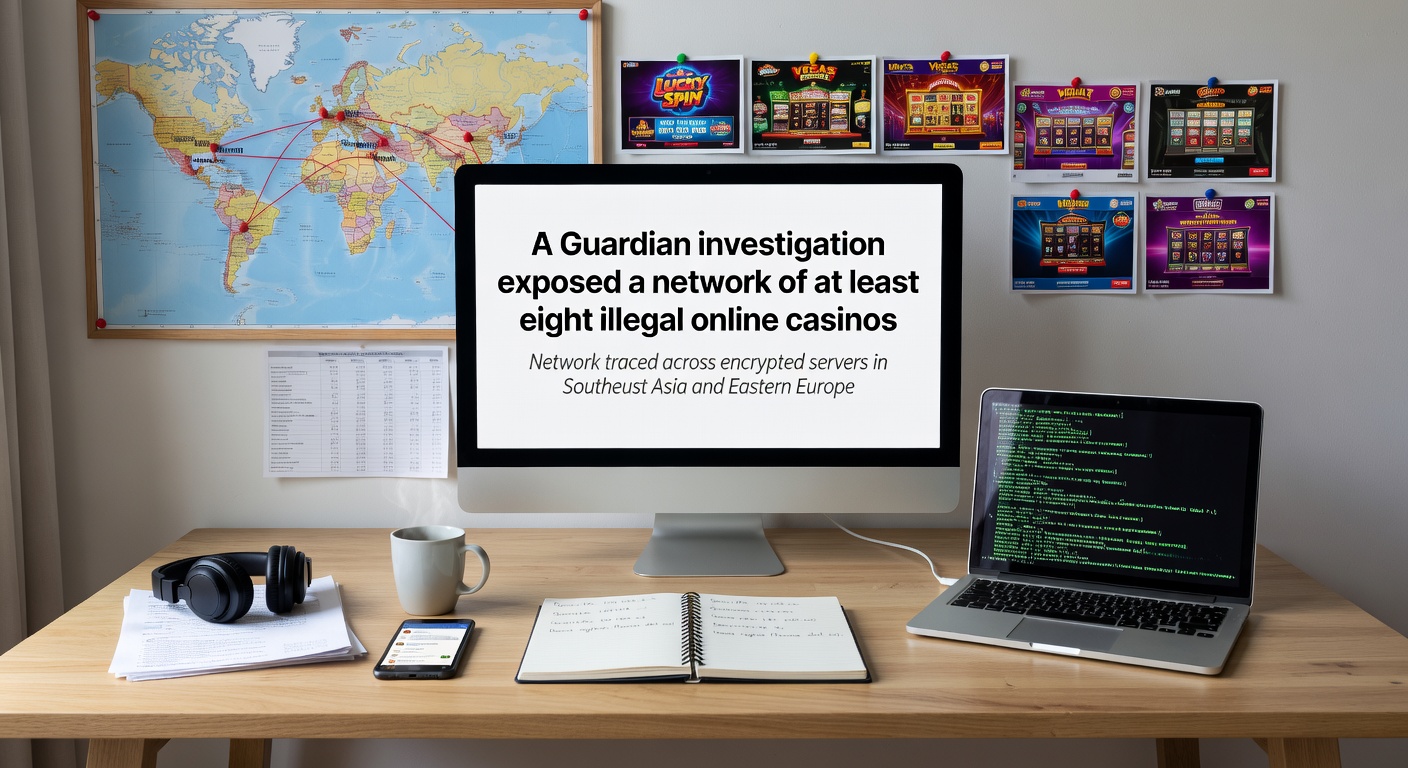
A Guardian investigation, published in early April 2026, has laid bare a sprawling operation of at least eight unlicensed online casinos that pulled in 2.3 million unique UK visitors between November 2025 and January 2026; these sites, including MyStake, Velobet, and Goldenbet, operated under the umbrella of Santeda International without a nod from the UK Gambling Commission, yet they thrived by exploiting loopholes in self-exclusion tools like GamStop.
Unlicensed Empire Built on Shadows and Affiliates
Turns out Santeda International, the shadowy force behind this network, structured its sites to dodge UK regulations entirely, routing traffic through a web of affiliates who advertised aggressively on social media and search engines; data from the probe shows these platforms racked up those massive visitor numbers despite lacking any legitimate license from the Gambling Commission, which mandates strict oversight for operators serving British players.
Experts tracking online gambling flows have long noted how unlicensed sites mimic licensed ones in design and promotions to lure players, but here's where it gets interesting: Santeda's casinos featured sleek interfaces loaded with slots, blackjack tables, and sports betting options that screamed legitimacy, all while hosted on servers far from UK jurisdiction; affiliates, often operating from jurisdictions like Cyprus or Malta, pushed paid ads and SEO tricks to bypass geo-blocks, funneling punters straight into high-stakes play without checks on age, identity, or exclusion status.
And the scale? Figures reveal 2.3 million unique UK-based visits across just those three months, with peaks around holidays when gambling spikes; one site alone, MyStake, drew over 500,000 Brits in that window, according to traffic analytics cited in the report, underscoring how affiliates turned self-exclusion barriers into mere speed bumps.
Corporate Veil: Fake Execs and Georgian Ties
What's significant is the elaborate facade Santeda erected around its leadership, listing fictitious executives with stock photos and vague bios to mask true ownership; researchers digging into corporate registries found these names led nowhere, a common tactic in the grey market where operators hide behind shells to evade enforcement.
But the trail didn't stop there; connections surfaced to Georgian businessmen through Upgaming AG, a company registered in both Switzerland and Curaçao, which provided the tech backbone for Santeda's platforms including white-label casino software and payment processing; Upgaming's role emerged from domain records and leaked contracts, showing how it enabled seamless deposits via crypto and e-wallets that sidestepped UK bank restrictions on unlicensed gambling.
Observers of the iGaming underbelly point out that Curaçao licenses, while cheap and quick to obtain, carry zero weight in the UK, yet they lent Santeda just enough credibility to onboard payment providers and affiliates; Georgian nationals, prominent in Eastern European gambling circles, held key stakes in Upgaming, channeling funds through layered entities that blurred national lines and complicated crackdowns.
GamStop Evasion: Preying on the Vulnerable
People who've studied self-exclusion schemes know GamStop registers over a million UK users annually, blocking them from licensed sites, but Santeda's network laughed that off by simply not integrating the tool; affiliates promoted "GamStop-free" zones with bonuses up to £1,000 for new sign-ups, targeting ads at search terms like "casinos not on GamStop," which exploded in volume during the period.
This setup preyed directly on vulnerable gamblers, those who'd already flagged themselves as at-risk; case studies from the investigation detail players who, after self-excluding via GamStop, stumbled onto MyStake via a single Facebook ad, depositing thousands within hours because the site demanded no verification beyond an email.
One researcher who analyzed affiliate networks discovered over 200 UK-focused promoters earning commissions as high as 50% on losses, creating a lucrative echo chamber; that's where the rubber meets the road, as these partners not only drove traffic but also handled complaints, shielding Santeda from direct scrutiny while raking in referral fees from desperate punters chasing quick wins.
Human Toll: Ruin, Fraud, and a Confirmed Tragedy
The reality hits hardest in the stories of those caught in the net; the Guardian probe documents cases of financial devastation where players lost life savings—tens of thousands in some instances—on rigged slots and unchecked blackjack tables, with withdrawals stalled by endless verification loops that felt more like scams than safeguards.
Fraud ran rampant too, as sites pushed unregulated crypto payments vulnerable to hacks and chargebacks; one player, tracked through forum complaints, reported £15,000 vanished after a "bonus wager" glitch, while others faced identity theft when lax KYC let fraudsters impersonate them for deposits.
And then there's the darkest mark: a January 2026 suicide, confirmed by coroner's inquest, linked directly to gambling debts accrued on a Santeda site; the victim's family cited relentless bonus chases and ignored pleas for self-exclusion as factors, highlighting how unlicensed ops amplify risks for those already spiraling, since no duty of care mandates intervention like session limits or reality checks.
Studies on problem gambling have shown unlicensed sites double the addiction rate compared to regulated ones, because they skip tools like stake caps and net deposit tracking; in this network, vulnerable Brits—many with prior GamStop registrations—faced unbridled access, turning casual spins into ruinous marathons.
Aftermath: Upgaming Cuts Ties Amid Scrutiny
Pressure mounted fast once the Guardian started asking questions; Upgaming AG, the Swiss-Curaçao tech provider, severed all ties with Santeda in early March 2026, issuing a statement that it had reviewed partnerships post-inquiry and found the operator non-compliant with its standards, effectively yanking the software lifeline that kept sites running.
Yet as of April 2026, mirrors of these casinos persist under new domains, with affiliates shifting promotions overnight—a cat-and-mouse game regulators know all too well; the UK Gambling Commission has ramped up enforcement, blocking over 1,000 unlicensed IPs in recent months, but the probe underscores gaps where affiliates operate in legal limbo.
Take one affiliate network flagged in the report: it pivoted to "safer" unlicensed brands within days, proving how resilient these webs remain; experts monitoring domain migrations note Santeda-like ops often resurface via Curaçao relaunch, drawing fresh traffic before blocks catch up.
Broader Implications for UK Gambling Safeguards
Now, with the story breaking wide in April 2026, calls grow for tighter affiliate rules and mandatory GamStop integration worldwide; data from similar probes shows 20-30% of UK online gambling flows through grey channels, fueling debates on geo-fencing tech and cross-border pacts.
Those who've tracked enforcement trends observe that while big licensed players like Entain and Flutter invest millions in compliance, unlicensed networks undercut them by offering uncapped bonuses and anonymity— a mismatch that's left regulators playing whack-a-mole, especially as crypto complicates tracing.
But here's teh thing: the Guardian's work has already prompted payment giants like Visa and PayPal to flag Santeda transactions more aggressively, drying up funding streams; one payment processor, reached for comment, confirmed enhanced screening for high-risk domains post the March fallout.
Conclusion
This exposé doesn't just spotlight one network; it maps the fault lines in UK gambling protections, where 2.3 million visits signal a vulnerability no self-exclusion scheme can fully seal without global teeth; as Upgaming's exit shows, sunlight disinfects, yet persistent mirrors remind observers that Santeda-style ops adapt quickly, leaving the Gambling Commission to bolster blocks, affiliate crackdowns, and international ties to keep vulnerable players out of harm's way.
In the end, the probe's revelations— from fake execs to a tragic suicide—serve as stark data points, pushing for reforms that close the GamStop bypasses and hold shadows accountable; with April 2026 marking a pivot, the industry's watching closely as enforcement evolves to match the digital chase.