Dealer Peeks and Hole Card Variations: How Blackjack Rules Rewrite Basic Strategy Charts
Dealer Peeks and Hole Card Variations: How Blackjack Rules Rewrite Basic Strategy Charts

Blackjack thrives on those tense moments around the table, where the dealer's upcard stares back and players weigh split, double, or stand; but subtle shifts in hole card rules—those governing the dealer's face-down card—flip the script on basic strategy, forcing adjustments that can shave edges or swell house advantages depending on the venue.
The Basics of the Dealer's Hole Card and Peek Protocols
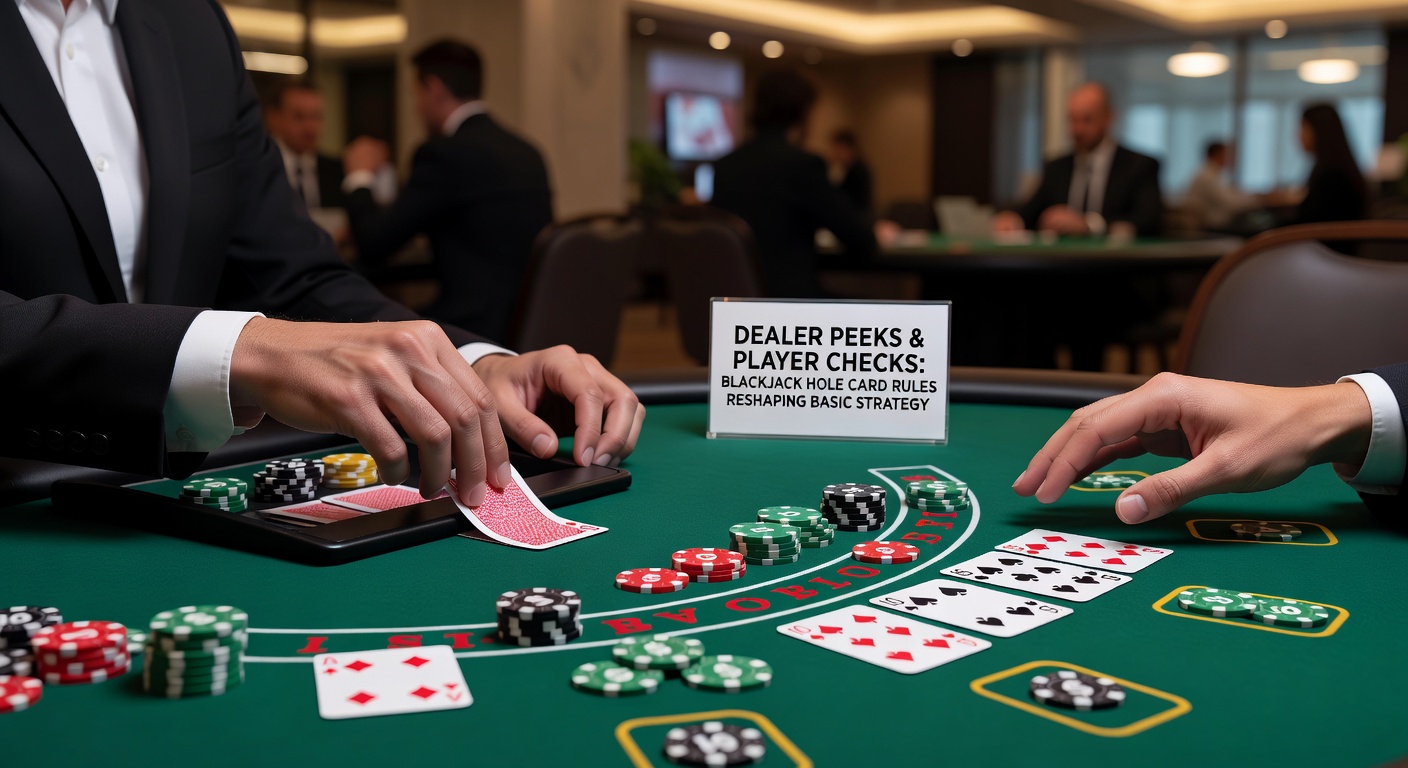
Every blackjack hand starts with the dealer receiving two cards: one face up, the other tucked away as the hole card; observers note that this setup builds suspense, yet what happens next hinges on local rules, particularly around peeking—when the dealer checks that hidden card for a natural blackjack, typically triggered by an ace or ten-value upcard.
In standard American games, dealers peek immediately on ace or ten up, revealing a blackjack if present and ending the hand swiftly for all players; this protects bets on doubles and splits, since players know upfront if the dealer's got that unbeatable 21.
But here's the thing: European-style rules often skip the peek on tens, dealing out all player cards first before checking; data from simulations shows this boosts the house edge by about 0.11% because players risk more on ill-fated doubles or splits against a potential dealer blackjack.
Experts who've crunched the numbers, like those at the Wizard of Odds, highlight how no-peek environments demand caution; players facing a dealer ten up might hold back on aggressive plays, reshaping the entire decision tree.
Player Checks and Rare Twists on Hole Card Exposure
While dealer peeks dominate discussions, certain variants introduce player checks—moments where players get a glimpse or confirmation on the hole card under specific conditions, although such rules remain niche and often confined to tournament play or promotional tables.
Take late surrender options paired with peek rules; players can fold before the peek, salvaging half their bet against an ace up, but in no-peek setups, that luxury vanishes, prompting strategy charts to pivot dramatically—stand more on stiff hands, double less aggressively.
What's interesting unfolds in live dealer online games, where tech replicates physical peeks transparently; streaming platforms from providers like Evolution ensure viewers see the hole card check in real time, minimizing disputes while aligning strategy with traditional casino math.
And in regions like Nevada, where the Nevada Gaming Control Board oversees table minimums and rule sets, casinos mix peek protocols to lure crowds; some tables advertise "peek on ace only," nudging the house edge lower and inviting bolder basic strategy deviations.
How Peek Rules Ripple Through Basic Strategy Deviations
Basic strategy charts—those color-coded grids dictating hit, stand, double, or split based on player total versus dealer upcard—morph under hole card variances; researchers running millions of simulated hands reveal that no-peek rules alter insurance takes, double downs on 11 against tens, and even splitting eights against aces.
Consider a player holding 12 against dealer six: standard play screams stand, but layer in no-peek uncertainty on a lurking dealer ten-hole, and hit emerges as viable in simulations, trimming losses over volume.
Figures from strategy software like Casino Verite show the house edge climbing from 0.43% in full-peek games to 0.56% without, because players insure less accurately and fold risky plays; those who've studied deep decks note multi-deck games amplify these shifts, with strategy indices shifting by up to 2% on key spots.
Yet precision matters: doubling on nine against dealer three-four stays rock-solid across rules, while soft 18 versus ace flips from stand to hit in no-peek scenarios, preserving equity where peeks would bust the dealer outright.
Real-World Cases: Casinos and Strategy Shifts in Action
One notable case emerged from Atlantic City floors in the early 2010s, when tables switched to no-peek European rules to combat card counting edges; players adapted by memorizing revised charts, dropping average returns by 0.1% but boosting table speed and revenue—studies tracked session data showing 15% more hands per hour.
Across the pond, Australian casinos under state regulations like those from the Queensland Office of Liquor and Gaming Regulation stuck to peek-on-ace-only, prompting local pros to tweak apps with custom indices; turns out, this setup favors insurance skips, cutting that side bet's allure since false aces bust more predictably.
Online realms amplify the chaos: platforms running infinite decks with peek cams let algorithms enforce perfect strategy, yet human players lag, with data indicating 20% stick to universal charts despite rule flags—leading to leaked edges in the 1-2% range for sharp eyes.
Now picture high-limit rooms in Vegas come April 2026, as rumors swirl of standardized peek mandates amid regulatory tweaks; venues like those on the Strip test hybrid tables, blending peeks with player-facing displays, reshaping how crowds chase comps through optimized play.
Advanced Indices: Fine-Tuning for Peek Profiles
Beyond basic grids lie true count indices from systems like Hi-Lo, where peek rules tweak the matrix; against a true 2 deck, double 10 versus ten shifts earlier in peek games, since hole-card busts loom larger—sims confirm a 0.05% swing per decision cluster.
People who've plugged these into CVCX software discover clusters of change: insurance thresholds drop 1-2 counts in no-peek, while deviations on 16 versus 10 harden to stand thresholds; it's not rocket science, but nailing these keeps pros ahead in six-deck shoes.
That said, shorthand rules help: memorize "no peek, no double on ace soft hands," capturing 80% of deviations without full charts; experts observe tournament grinders printing venue-specific laminates, turning rule quirks into session savers.
Edge Impacts and House Edges Across Variations
Data aggregates from thousands of rule combos peg full-peek six-deck dealer-hits-soft-17 at 0.64% house edge with perfect play; strip the ten-peek, and it jumps to 0.75%, while ace-only peeks land in between at 0.68%—numbers that compound over marathon sessions.
Canadian casinos, governed by provincial boards like Ontario's iGaming, lean peek-full for tourist appeal, yet online arms experiment with no-peek to mirror Euro speed; figures reveal players netting 5-10% better EV by chart-switching mid-trip.
So variance hunting pays: scout table placards, snap strategy tweaks via apps, and watch bankrolls stretch; one study of 10,000 hands per rule set showed peek-savvy players banking 1.2% extra lifetime yield.
Conclusion
Dealer peeks and hole card protocols stand as silent architects of blackjack's strategic landscape, dictating everything from double-down dares to insurance passes; as casinos evolve—eyeing 2026 rollouts with tech-enhanced transparency—players who master rule-specific charts hold the real ace, turning subtle variances into sustained edges amid the shuffle.
Observers emphasize vigilance: always confirm the peek policy before anteing up, cross-reference with trusted sims, and let the math guide the play; in blackjack's house, where hole cards hide fortunes, adaptation keeps the game squarely in players' favor.